ALL THE PERFUMES OF ARABIA: Renaud Salmon Is Creating Stories of Epic Proportions at Luxury Fragrance House Amouage
Interview by Maxine Leonard
The drama of storytelling could not be more pertinent than in discussions about fragrance. Ever since Shakespeare’s Lady Macbeth first uttered the heart-rending words, “All the perfumes of Arabia will not sweeten this little hand,” our obsession and connection with the emotive power of scent, especially the mystical odours of the East, have been ignited within the collective olfactory ether.
As with such evocative literary figures, whose battles of conscience have sparked the dramatic narratives our imaginations desire, hyperbole has long surrounded the cultural and spiritual significance of fragrance and its potential to create a character. However, few perfumers have achieved the holy grail of capturing what one may consider ‘emotion in a bottle’ as convincingly as the high perfumery house Amouage.
Beauty Papers’ Maxine Leonard travelled to a magical country, found on the southeastern coast of the Arabian Peninsula, on a quest to explore the heady world of fragrance through the lens of one of its foremost originators. Here is Maxine in conversation with Amouage’s chief creative officer, Renaud Salmon – at the Alila Jabal Akhdar hotel – during which she discovers how this independent luxury brand is redefining the art of perfumery via an enduring odyssey through new realities and toward stories yet to be told.
Maxine Leonard: I wanted to start by talking to you about how fragrance prompts an emotional response and how important it is to connect with the consumer through imagery and storytelling.
Renaud Salmon: I think the importance of that comes from the realisation that the perception of fragrance is synaesthetic, which means you smell a fragrance not only with your nose, but with your eyes, with your hands. I was taught that early on in my perfumery training, during which my teacher would have me smell three fragrances – one yellow, one blue and one green – and then say which one of those fragrances had more lemon notes, which one had more pine notes, which one had more water notes. And then I smelled them, and it seemed like the yellow one had more lemon notes and so on. And actually, what he told me is that all three of them are exactly the same. You smell with your eyes. Like with beautiful poetry, it’s about selective attention. So when I create a fragrance I consider the colour of the bottle, the texture of the bottle, the imagery around it, the environment in which it’s going to be presented and the people who are advising on the fragrance, because the perception of people might be heavily influenced by all of that. And I’ve realised that I’m obsessed with proposing a complete artistic direction around the smell – every detail, every aspect of the story is about each fragrance.
ML: How long did it take you to train?
RS: I trained for two years in fragrance evaluation in New York. I mean, you learn on the job as well, and I’ve been doing this for 17 years now. And I think your nose is like a muscle, so you need to train it every day.
ML: Is it true that the only place that the cells renew is within the nose?
RS: I don’t know about that, but it’s literally something that gets much better with training. I lost my sense of smell during the pandemic and our CEO was quite worried about it, but obviously it eventually came back. Actually, perfumers at the time quickly put a protocol in place – they created this kind of box. The objective was for you to smell about 200 ingredients every day. It is quite a painful process, yet those ingredients were ingredients that you know by heart, like the smell of lemon, and that’s how the brain actually reconnects at some point. I like to smell everything I eat. Every time there is something I find interesting visually, I tend to smell it as well.
ML: And is it true that there are fewer perfumers than there are astronauts?
RS: Yes, I’ve heard that. Here in Oman I would say that everyone is a perfumer, in a way, particularly if you talk with young people – they tell you that their mother actually makes their own perfume and they give it for celebrations. It’s kind of a tradition I’ve observed here.
ML: It’s something I’ve really noticed here – when walking past Omanis, I can smell their perfumes and it feels like there is a strong cultural alignment with fragrance.
RS: This is a country where fragrances are more than the finishing touch. They are so important, so woven into the different layers and rituals. Just like the art of dressing, or hospitality. You go to the house of some people, they welcome you with rosewater so that you can clean your hands. Then at the end of the dinner, they always come out with a tray of their fragrance collections.

ML: What’s the start of the process when creating a new formula for a fragrance?
RS: Usually the process starts with an emotion, something I am feeling. I always work with the approach in collage. I like that renowned artists have been using collage as a way to create a new reality by bringing elements that are not supposed to live together. So I look at emotion, and my memories, in all kind of arcs. What can I recall that talks about that specific emotion? It could be an impressionist painting, it could be a piece of music, and so on. I connect with Magritte, for example, and then I connect with someone I see giving me that emotion in the moment, and a very interesting new reality develops that informs the graphic design, the fragrance, the materials, and so on. And then when I get to share that with the audience, I think people will be able to connect with what they are familiar with.
So if we take the fragrance Guidance by Amouage, it was inspired by the strength of Omani women. What is the archetype of a strong woman? For inspiration I look towards imagery from photographers like Paolo Roversi, the way he portrays strong women with this gaze. And if you look at the artwork on the box of Guidance, it resembles the flowers of Irving Penn in an artful way – all of that comes together in my collage, my mood, and then it becomes a new reality. Ultimately, everything can be quite abstract, like the name Guidance – it’s not obvious. If you want to know about the story…
ML: You’ve spoken before about time and pace and the need to slow down in order to draw breath and, thus, help achieve a healthy creative process. How do you manage this in the digital age, where nuance and detail are often lost in the format of social media and the immediate feeling is so necessary?
RS: What drives this perception of being constantly in a rush? I think we tend to approach things in a sequential way. If I were to move from one idea or one creation to another, I think I would always feel like I’m rushing and that I’m being driven by external factors instead of creativity. And what I like to do is open a lot of directions at the same time. During the pandemic I stayed here [the Alila Jabal Akhdar hotel] and I literally started the creation of ten fragrances.
ML: That’s really not a surprise, as this is a wonderful environment to create in. It’s interesting to me, the idea of being creative during the time of the pandemic, as it was such a complex time.
RS: Yes, and some of those fragrances have not been released yet, which means that, for some of them, I’ve had the luxury to work on them for three, four or five years, which creates an exceptional flow of creativity, driven by the circumstances, because everything has been slowed down. I think one has to do that with the creative process. One has to also realise that perfume is ultimately connected with nature and natural ingredients. And, by definition, nature lives with the seasons, and it’s something that I insist on. I see way too often how things that don’t make sense from a communication point of view, like the communication of citruses in the middle of the winter and things that don’t fit seasonally.
I force myself to stick to the seasons because it creates a healthy rhythm of events. The rose season is in March, so at this time we stop everything and we go to pick the roses and we talk about it, because that process in the immediate drives a desire for real time, which resonates strongly with me. But it also imposes a lot of constraints, because sometimes it means lowering the quality of what you do as well, because you want to get things out quite fast. So the question with the team becomes how can we move to something that feels very real but also very qualitative and elevated from an artistic direction? I think it’s a healthy tension, but it’s indeed very challenging.
ML: You can build your own?
RS: This is something that is important to me. I think a lot of the things I do are somehow influenced by my experience, my history and so on. But I don’t want to force my own specific interpretation on the audience. I want to offer the possibility to the audience to make their own interpretation. So that’s why the names are always strong names but they leave room for interpretation as well. The colours, the artworks etc, I want them to be abstract, but I think they are quite evocative as well, like the fragrances are.
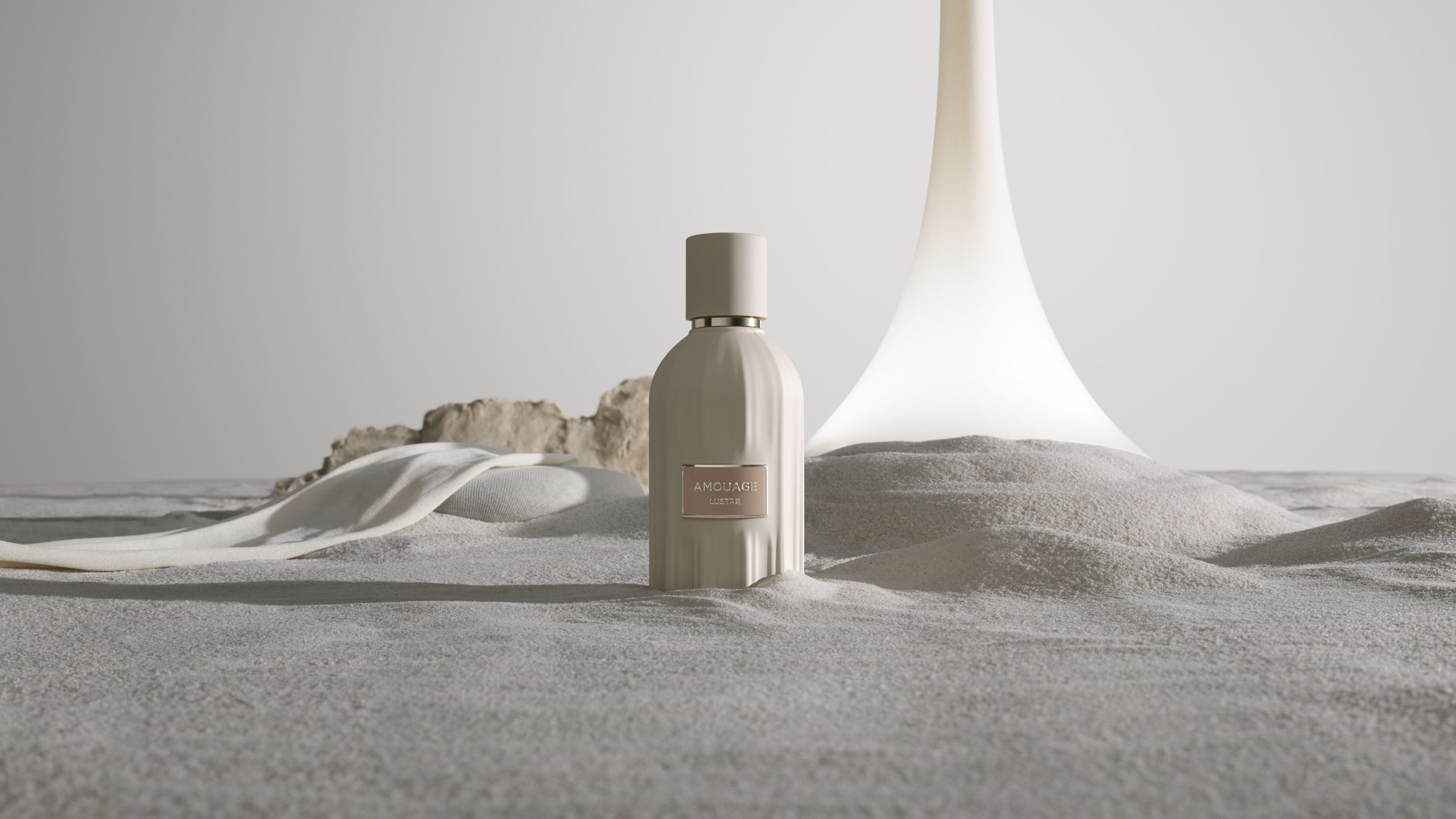
ML: From the new collection called Essences – which comprises three scents – I wanted to ask you about Lustre, because that was the fragrance I picked out of the three. When you’re working with Paul Guerlain and Julien Rasquinet, the noses for this one, how much influence do you have over that final scent?
RS: I have influence but I don’t like to impose. I would say I influence through a precise brief as much as possible by being going into details I believe are going to resonate with perfumers, because some perfumers react better to musical references or paintings or short text. My role is to edit, because usually they come out with lots of proposals. I’m like, OK, I like the direction, maybe this one doesn’t have potential, and so on. So being able to edit early on in the process is important. With the editing process I narrow down by just living with the fragrances. And I think it’s something that people don’t do enough of. Sometimes it can take several months.
ML: Do you conceptually come up with a character for who Lustre maybe could be?
RS: Yes, in a way, but more than the character of a person I look at the character of a fragrance. I wanted Lustre to be creamy and golden. I wanted something woody but creamy, as woody can be sharp. I wanted something velvety in context, like a cashmere jumper. But I rarely think about a specific type of person when creating a fragrance. It’s more about a context, then adjacencies, like an old pair of boots, leather boots – you know, distressed and so on. Or reflecting on a fragrance that would be perfect for a Sunday afternoon at home when it’s raining or something. So it’s more contextual than imagining a character. I force myself to not be technical in my approach.
ML: So you allow for playfulness in process.
RS: Yes, because perfume should be about that. I realise that some people are not comfortable speaking about perfumes and smell. For example, people will talk about a picture, or people will talk about a song, but they are more uncomfortable describing how they feel about perfume compared to other senses.
ML: Do you think that’s because it represents smell?
RS: Yes. I think it’s because it’s invisible. In a way, despite the fact that it’s part of everyday life, it’s super-powerful. I think the sense of smell is the sense people trust the least and feel the least at ease with when it comes to describing it and explaining how it makes them feel.
ML: I suppose, in a way, it’s not physical or tangible, it’s ethereal.
RS: It is indeed less tangible, but also very intimate. I could say I like the way your hair looks, but if I were to say I like the way your hair smells, it’s immediately more intimate.
The Essences
ML: In terms of your work, do you have a rebellious spirit?
RS: I don’t think so. I was perceived as rebellious in my family because I grew up in a small town in Belgium and I wanted to go to the big city. So I went to Brussels to try to make it in a world that they considered, how do you say, superfluous or superficial. So I think from that point of view, yes. But my parents did not trigger a rebellious attitude in me. It was more empowering in a way. My personality, I think, is always very diplomatic, and I care a lot about the impact I have on people. I have strong convictions but I’m always trying to convey them in an approachable, diplomatic way. And from that point of view, I think, Oman fits me well, because soft diplomacy is something super-important in Omani culture.
ML: There’s something really seductive about the brand originating from Oman.
RS: I agree, but it’s challenging as well. You could be literally screaming in the middle of the desert and no one would hear you, so you need to find a way with all your heart, your passion, and by putting the extra effort into it to work really hard and not deviate from the vision. When we welcome people, like with the trip you have experienced, I think that’s the way you build a sustainable business, because it’s really built on those kinds of intimate relationships between people who can have a genuine experience with Amouage.
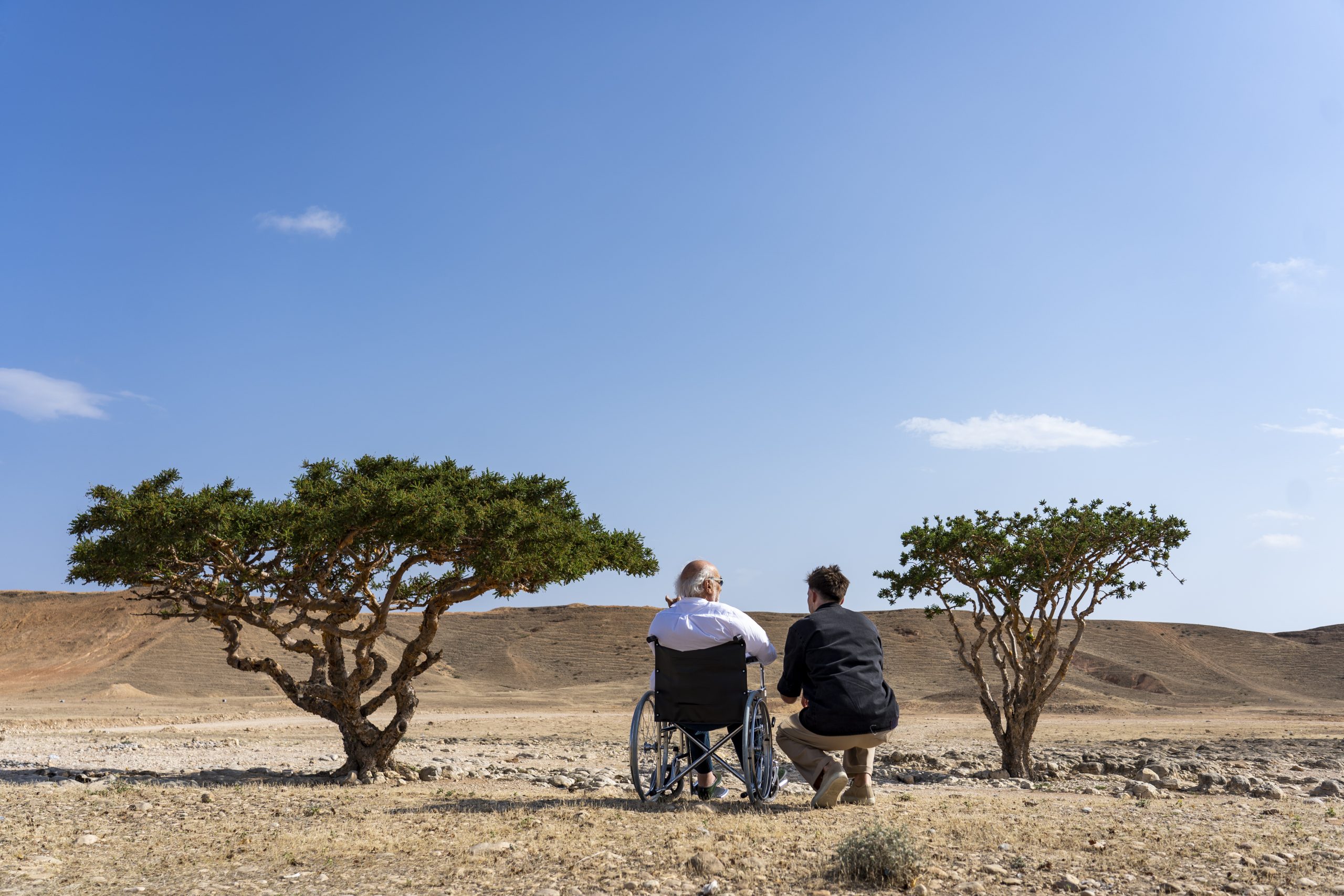
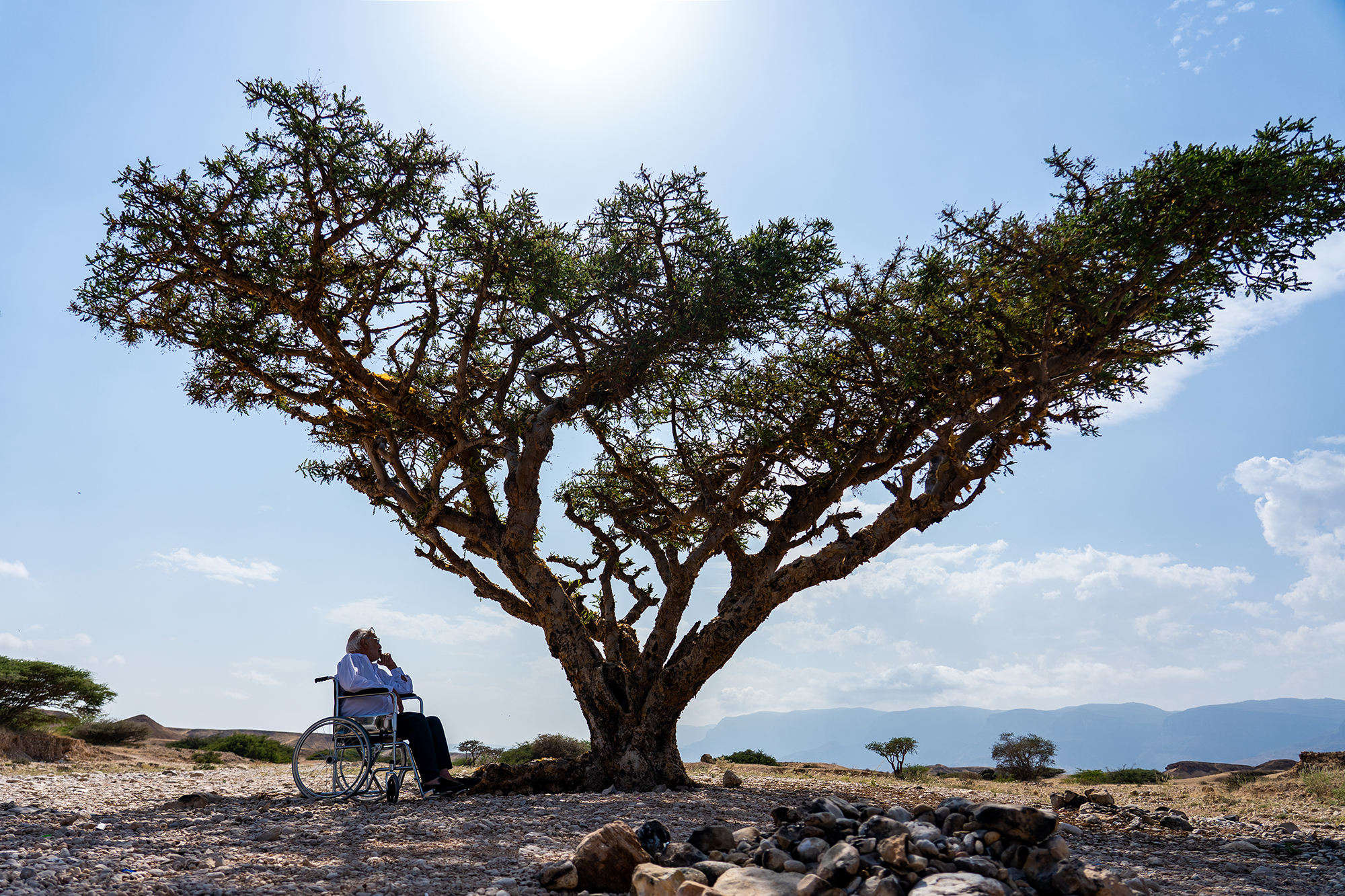
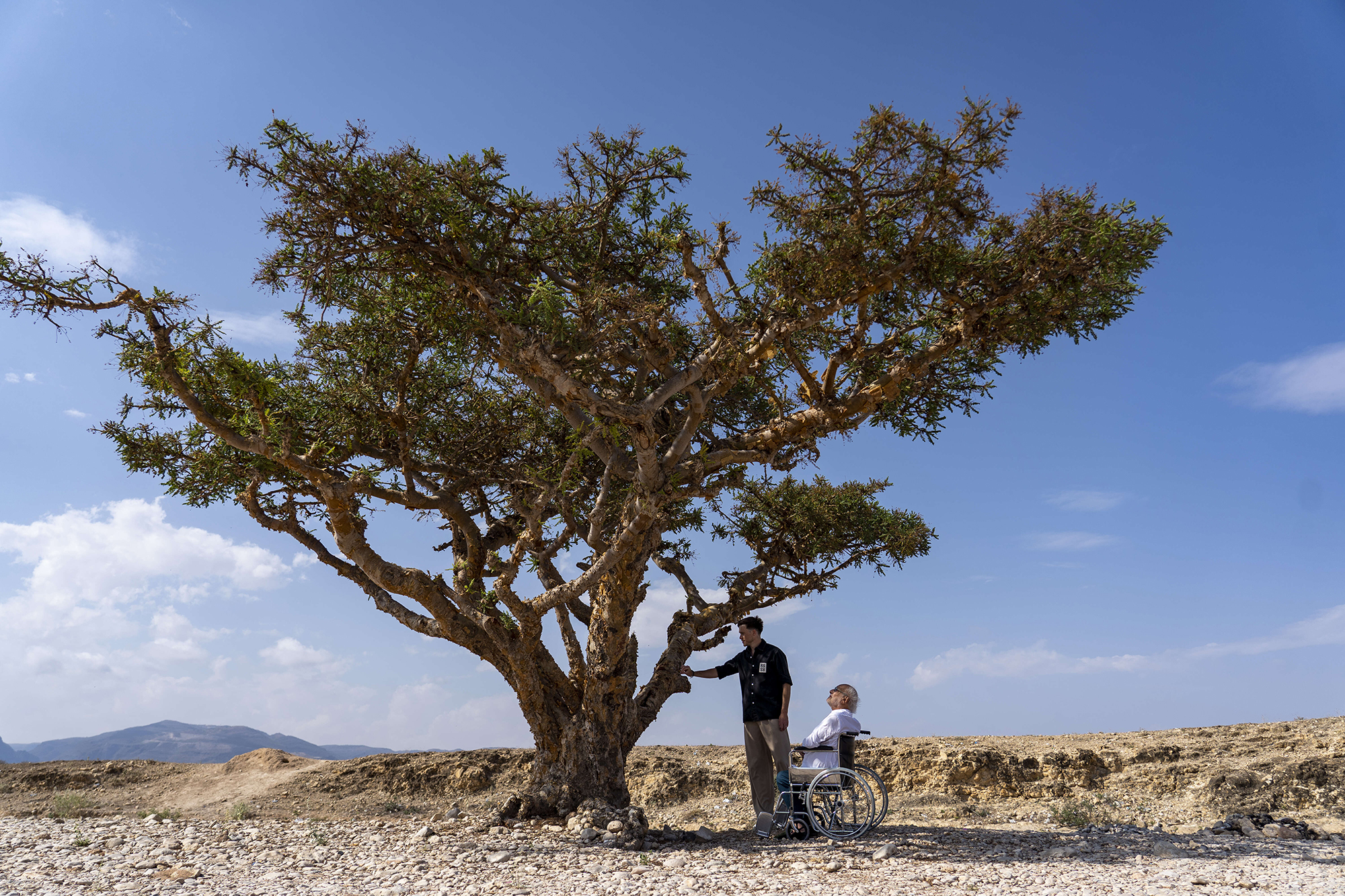
ML: One of the experiences I loved in Oman was when you described collaborating with the legendary Italian architect and designer Gaetano Pesce and how he came to Oman to design the logo for frankincense trees at the Wadi Dawkah Estate. You mentioned that, aside from the logo, he designed chairs made from resin that included frankincense too – can you tell me more about this collaboration?
RS: He literally started from the tree and the drawing of the tree. The chair contains frankincense and you can see some of the particles. I learnt so much with Gaetano. I think he may have been colour-blind at the end, because he made things that were so bright.
ML: How special, though – what an incredible experience to have had with him.
RS: It was a very special project for me, and what was striking about Gaetano, first of all, is that he agreed to come to Oman, because at the time he was using a wheelchair. I sent him a five-kilo bag of frankincense and I wrote a card saying, “Gaetano, we don’t know each other, however I work with resin and you work with resin. I think we should do something together. Please experience the best quality of resin from Oman.” And he answered and then he invited me to come to NYC. We met in his studio in Brooklyn, he was extremely curious. Like, that’s the one thing I was obsessed about, his curiosity. He was childlike with his questions, in the way children ask questions, with an inquisitive nature. He asked about the trees – how do they look? Do you think the trees are happy? How do they live with the camels? When he came to Oman, one of the things he really liked were the camels.
ML: I adore camels – those mad, floppy eyes and their facial expressions just kill me!
RS: It was the same for him! I explained to him, “Gaetano, we need to protect the trees from the camels.” If they eat the leaves of the frankincense trees the trees progressively die, and because people became sedentary the camels stay in the same place because people are not nomadic any more. Gaetano was very sad about this so he wanted to build colourful fences and had an idea to create a visitor centre for the frankincense. He did not want something aggressive for the camels, and he was like, “This is how it should be done.” Like, the camels should actually have fun. I loved it. And today I’m very aware that it was a very special gift, with this being his last trip before he sadly passed away [in April this year, aged 84], and happy that he got to experience Oman.
ML: There’s such a creative legacy to this story.
RS: It’s very precious to me. I took lots of pictures when we were with Gaetano. We had lots of discussions united by the trees. We were just sitting there together, looking at the trees, smelling the trees and listening to the wind in the leaves. It represents a project about diversity and how we can all live together in happiness. So he was convinced about that. And lastly what I learnt from him was he was convinced that any piece of design should be a statement, from an ideology point of view. A chair that does not have a message is a lost opportunity, because a chair is a platform to express a message – it’s not only something to sit on.
ML: This goes back to that importance of storytelling, doesn’t it? We all need stories, they really oxygenate us. It’s why we read books to children, to stimulate young minds – and I firmly believe as adults, we need it equally, if not more.
RS: I think so. And from that point of view, I keep thinking about that when I create a fragrance. I’m not here to make any type of political statement, it’s not my responsibility. I make fragrances. I want to make good-smelling products, that’s my job. I want to make the best fragrances. Gaetano was telling me, “Renaud, but you know, as an artist this is not only your opportunity but your responsibility to actually use what you create to convey a message. It’s a responsibility, you need to put a message out there. Is it a message about diversity, about acceptance, about self-acceptance, about positivity? You cannot just hide behind the quality of your product.” And I think that was a very interesting discussion. Today, when I put something out there and I work on new fragrances I think about this.
With the Essences that we launched I think that they express a statement about something I genuinely believe in that is important when it comes to the relationship between people and time. I want to tell people that this obsession for instant gratification and things that are rushed is for the sake of what? For the sake of numbers, or for the sake of achievement or something like that? I think it comes at the expense of substance and the depth of relationship and quality. This observation is part of the message.
ML: Part of the message, or manifesto, at Beauty Papers is the beauty of possibility. I wondered how that resonates with the idea of fragrance and your creative journey? What would be your ultimate dream collaboration and would it transcend fragrance? Would it evolve out of scent?
RS: Oh, totally, yes. I think I would love to be part of an artistic project, like an ambitious artistic project in which you play and discover all of the senses. Imagine working with a few artists to try to create something extremely emotional – the intention, the objective is to actually produce a piece of art that’s multisensorial around the aromatic that would involve visual arts, music, even fashion and beauty. You know, like a play or a movie. I would love to take care of the olfactive aspect of it. I mean, that could be something quite strong. Imagine putting all of your efforts with a collective to try to create something that people would deeply connect with.
ML: What are the future goals for the brand and for you moving forward?
RS: I was talking to someone the other day and they reflected that they felt they were seeing Amouage everywhere. I like the feeling that we are trying to build something that resonates internationally, but we are trying to build that literally from the middle of nowhere, meaning that when you look at the world of luxury, Oman is not a destination. We do not have a fashion week calendar like Europe or Dubai. Oman is far away from everything, but this creates a sanctuary of unadulterated beauty and creativity, and from there the mission is to try to do something that people are going to notice internationally. And I just love that. And moving forward, I think I would love Amouage to be a brand that embodies a different kind of luxury. I think that would be one of the best things that we can do, not only for Oman, but also for the worlds of perfumery, beauty, and culture in general.
Special thanks to Amouage, Chief Creative Officer Renaud Salmon and Lucien Pages